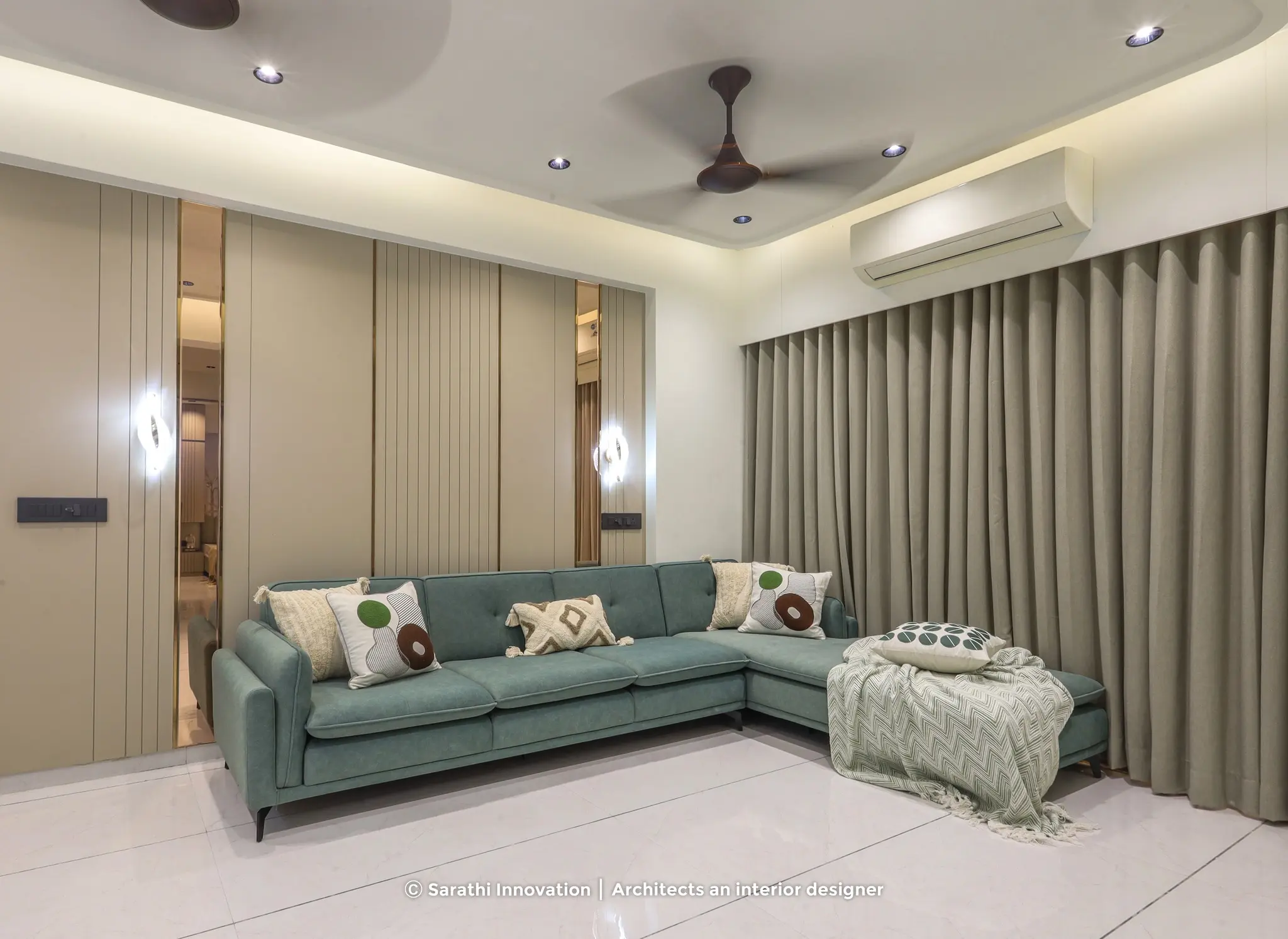
The Role of Texture in Interior Home Design: Adding Depth and Soul

Chirag Vekariya
Why Texture is More Powerful Than Hue in the Design World
You enter a room that appears fastidiously clean: spotless walls and well-coordinated colors, polished surfaces. Yet something feels flat. Emotionally, its missing soul. And that’s the magic of texture, the subtle combination of surface, pattern and tactile sensation that elevates a space from visually correct to emotionally in tune.
At Sarathi Innovations, we perceive texture as the vessel taking architecture to emotion. In cities like Ahmedabad, where all that marble and glass can get cold to the touch, texture is the secret ingredient that adds coziness, dimensionality and high-end feels to your home.
The Difference Between Visual and Tactile Texture
1. Visual Texture
Visual texture describes patterns that appear to have depth, even if the surface is smooth. Examples include:
- Wood grain that visually guides the eye along a table or cabinet.
- Marble veins that create movement and richness in kitchen countertops.
Textured wallpapers or geometric wall panels that trick the eye into feeling dimensionality.
Pro Tip: Mix visual textures in muted tones to create understated elegance without overwhelming the senses.
2. Tactile Texture
Tactile textures are those you can touch. These are the things that make a room linger in memory:
- Velvet cushions or headboards that invite touch and indulgence.
- Jute or sisal rugs that bring earthiness underfoot.
Fluted wall panels or plaster finishes that give character to walls.
Pro Tip: Seasonally rotate tactile textures silks and velvets are winter friends, lighter linens feel great in summers to keep comfort and practicality balanced in Ahmedabad’s climate.
How to Combine Textures Like a Pro: Sarathi Innovations Layering Rule
Layering texture is an art. When done right, it adds depth without crowded space. At Sarathi Innovations, we work in three steps:
Contrast
Combine smooth surfaces with textured ones.
- For instance, a sleek, modern modular kitchen brings warmth and some interest when it is paired with a rough stone or patterned tile backsplash.
Balance
Use heavier textures to weigh the room down and lighter ones to lighten it.
- Example: Rough jute rugs or stone surfaces ground a living room, while silk cushions and sheer curtains add lightness and elegance.
Practicality
Opt for textures which are easy to maintain in dusty and high traffic areas like Ahmadabad. Steer clear of high-pile rugs in high-traffic places, and choose washable fabrics for upholstery.
The 5 Textures Every Home Needs
- Stone or Marble: Brings a sense of timelessness as well as a tactile, cool grounding quality.
- Wood: A natural source of warmth and visual complexity, great for floors, shelves or furniture.
- Textiles: Silk, velvet or linen for cushions, drapes and throws.
- Rugs & Carpets: Use layering jute, sisal or flatweaves to define cozy areas.
- Material And Texture Accents: Fluted panels, textured paint or decorative plaster on walls and ceilings.
Pro Tip: Select high-grade fabrics from Livoraa Furnishing, well-known for durability and richness of textures in modern design sensibilities.
The Importance of Texture in Your Home
Texture is not just a design choice but an emotional narrative. A highly textured room makes guests linger, becomes an invitation to relaxing and a message that every inch has been carefully curated. In the modern homes of Ahmedabad, a textural play with minimalism can give birth to spaces that embody luxury along with warmth and functionality.
Are you ready to experience the difference? Get in touch with Sarathi Innovations for a bespoke interior consultation and let us layer texture to essentialize soul in your home.
FAQs
1. Is it possible to ditch color for texture in interior design?
Texture is an accompaniment to color it can balance or soften the palette of colors but works better as a companion to deliberate color choices.
2. How will I clean those with textured surfaces in a dusty city like Ahmedabad?
Use low-maintenance materials like sealed stone, washable fabrics and flatweave rugs. Vacuuming regularly and dusting with microfiber will keep it clean.
3. Can small rooms handle multiple textures?
Yes! Use layered textures for subtlety, and small-scale tactile elements to build dimension without crowding the space.
4. Are certain textures better for high-traffic areas?
Durable textures like jute, leather, or treated wood are ideal for floors and frequently touched surfaces. Avoid delicate silks or high-pile rugs in busy zones.
5. How do I combine visual and tactile textures without clutter?
Follow the Sarathi Layering Rule: balance heavy and light, smooth and rough, and limit the palette to 2–3 core textures per room for a sophisticated look.