The Essential Components of an Interior Design Project: The Anatomy of a Transformation

Chirag Vekariya
The Complexity of Design
When starting out on a new interior design project, most people can picture the outcome: the carefully curated decor, the nuanced furniture placement and refined finishes. But just like an iceberg, the tip is only a small part of what lies beneath. The real work behind a design transformation is hidden in the undercurrents, the planning and coordination, the technical know-how, undertaken to bring that vision into existence.
Having spent more than a decade in the industry overseeing hundreds of projects from conception through construction completion, I’ve learned that successful interior design is not simply about curating beautiful pieces; it’s about composition coordinating the myriad interrelated components that must converge perfectly. In this complete guide, we will discuss the six key elements that are the foundation of any interior design project and can transform your space.
Experience: The ‘Big Picture’ Perspective of a Project
Interior design is usually considered by the final product: the decoration, the colors, the finishes. But as any seasoned professional will tell you, this is just the tip of the iceberg. The bulk of work is happening below the waterline planning, logistics and technical work. A well-executed project lifecycle starts with a deep understanding of client needs, traverses technical accuracy, and concludes with seamless integration of various design elements.
And as I got older, I found out that the secret of a successful project is to manage every phase, taking care that no detail is overlooked. The design process is not linear, it's cyclical, with continuous collaboration and adaptation. Once you understand this, it will give you a better idea of what to expect (opportunity!) and how to exceed expectations with the end result.
Expertise: The 6 Core Components of a Project
1. The Conceptual Phase: Setting the Foundation
Providing a sound conceptual basis for every project. The most important first step is to enter the world of the client vision and needs. Enter mood boards, 3D visualizations and spatial zoning. Mood boards are useful in taking abstract thoughts and turning them into physical images, and 3D renderings provide a glimpse of the space digitally. On the other hand, spatial zoning maintains that each place serves its intended goal whether a kitchen, lounge space or work area.
2. The Technical Drawing Set: The Blueprint for Construction
Once a concept is established, it’s time to articulate ideas into technical drawings. The Good For Construction (GFC) drawings are kingthey define the nitty-gritty of electrics, plumbing, false ceilings and everything else. Those drawings are the instruction manual contractors use to ensure that work is built per the design intent and local building codes.
Here at Sarathi Innovations, we value accuracy and precision when it comes to technical drawings. They are key components in any successful interior design project, and they outline the scope of work clearly so there is no grey area.
3. Civil & Structural Changes: Laying the Groundwork
While the decor and finishes get all the attention, it is often the physical changes to the space that are most labor-intensive and that require the highest technical expertise. These include the removal and installation of walls, leveling floors, and waterproofing features such as bathrooms and kitchens. Engineers will also be tasked with updating support beams or reinforcing foundations.
These changes make the space readily usable and safe, along with a solid foundation for aesthetic improvements to come. All adjustments are intentional, “thought out” to accommodate the client’s agenda and longevity of space.
4. The Modular Core: Precision in Customization
A modern interior design that harmoniously works in modular elements from the factory is customized kitchens, wardrobes and any kind of furniture to achieve precision and uniformity. By using this modular approach, it not only keeps the design sleek and modern but also allows for functionality and durability improvements. For example, modular kitchens can be customized to suit every nook and corner while ensuring maximum storage and aesthetics.
We at Sarathi Innovations with the best modular designs, ensuring that every detail is in place and executed to perfection.
5. The Material Palette: Sourcing the Right Components
It is materials that transform a design into life. The items you select, from hardware such as Blum/Hettich hinges to high-quality laminates and veneers and lighting fixtures, plays a vital role in leaving an impact. The material palette has to be there, in harmony and balance between beauty and use. It’s not only about choosing what looks the best, but that will also withstand the test of time.
Sarathi Innovations emphasize using high-quality materials. For design not only to be eye-catching, but also long lasting we use the best products out there.
6. The Soft Furnishings: Adding the Final Touches
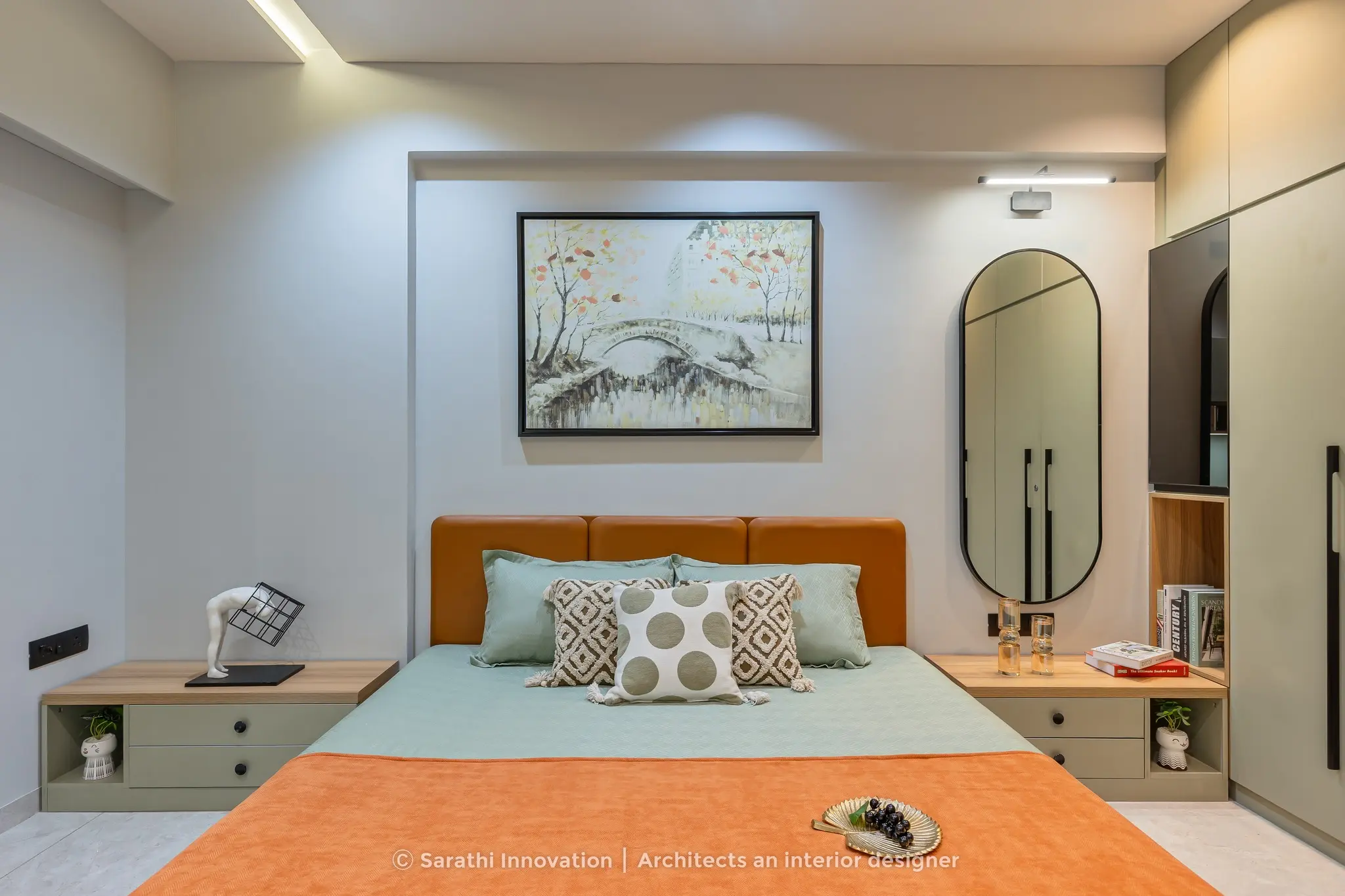
Soft furnishings such as fabrics, designer luxury headboards, and artwork are often the finishing touches that complete the design. These elements elevate the space, adding texture, color, and personality. Careful attention is given to selecting the right fabrics and accessories that complement the overall design while adding comfort and warmth.
Key Pillars of Interior Design
Why Technical Drawings are the Backbone of Your Home
Technical drawings are often mistaken for being just blueprints, but they are so much more. They are the backbone of a properly executed project and guide every phase of construction. A design cannot be accurately executed without accurate technical drawings. They make sure every wall is where it’s supposed to be, every pipe and wire goes in the right direction and that what comes out at the end matches what the client pictured.
Vendor Management: The Logistics Component
On-time, on-budget project delivery relies heavily upon effective vendor management. Sarathi Innovations has tied up with many trusted suppliers and contractors to get the proper materials and services timely. This partnership allows us to manage the project timeline and ensures that all parts interact with one another effectively.
The Transparency Checklist
Transparency is key to building trust with clients. At Sarathi Innovations, we provide our clients with a comprehensive set of documents to ensure they have complete visibility into the project’s progress and costs. This includes:
- Bill of Quantities (BOQ)
- 2D Plans
- Warranty Certificates
- Change Order Documents
By ensuring our clients have access to these documents, we foster a sense of security and transparency, making them feel informed and confident throughout the project.
Project Timeline
Phase | Duration | Key Milestones |
| Conceptual Phase | 2 weeks | Mood boards, 3D visualizations |
| Technical Drawings | 3 weeks | GFC drawings, approvals |
| Civil & Structural Changes | 4 weeks | Demolition, floor leveling, waterproofing |
| Modular Core Installation | 3 weeks | Custom kitchen, wardrobes installation |
| Material Selection & Sourcing | 2 weeks | Finalizing materials and furniture |
| Soft Furnishings & Final Touches | 2 weeks | Upholstery, artwork installation |
| Final Inspection & Handover | 1 week | Final walkthrough, client approval |
Get Your Comprehensive Site Audit Today
At Sarathi Innovations, we take pride in delivering complete, turnkey solutions that encompass every aspect of interior design. If you're ready to transform your space with the help of experienced professionals, contact us for a comprehensive site audit. Let us guide you through the process from start to finish, ensuring a seamless and satisfying design experience.
FAQs
1. What should I expect in the conceptual phase of an interior design project?
The conceptual phase involves understanding your needs, mood boarding, and creating 3D visualizations to bring your vision to life. Spatial zoning is also considered to ensure each area is designed with its intended function in mind.
2. Why are technical drawings so important?
Technical drawings, like GFC drawings, are essential for ensuring the accuracy and precision of your construction work. They detail the specifics of electrical, plumbing, and other critical elements, helping contractors execute the design correctly.
3. How long does a typical interior design project take?
The duration of a project varies depending on its complexity, but a typical timeline ranges from 3 to 6 months. This includes all phases, from conceptualization to final touches.
4. What is a modular kitchen, and why should I choose it?
A modular kitchen is a pre-fabricated, customizable system that allows for maximum space utilization and modern aesthetics. It’s a great choice for efficiency and precision, ensuring that every unit fits perfectly.
5. What are the key documents I should receive during the project?
You should receive a Bill of Quantities (BOQ), 2D plans, warranty certificates, and any change order documents. These ensure transparency and give you complete control over the project.