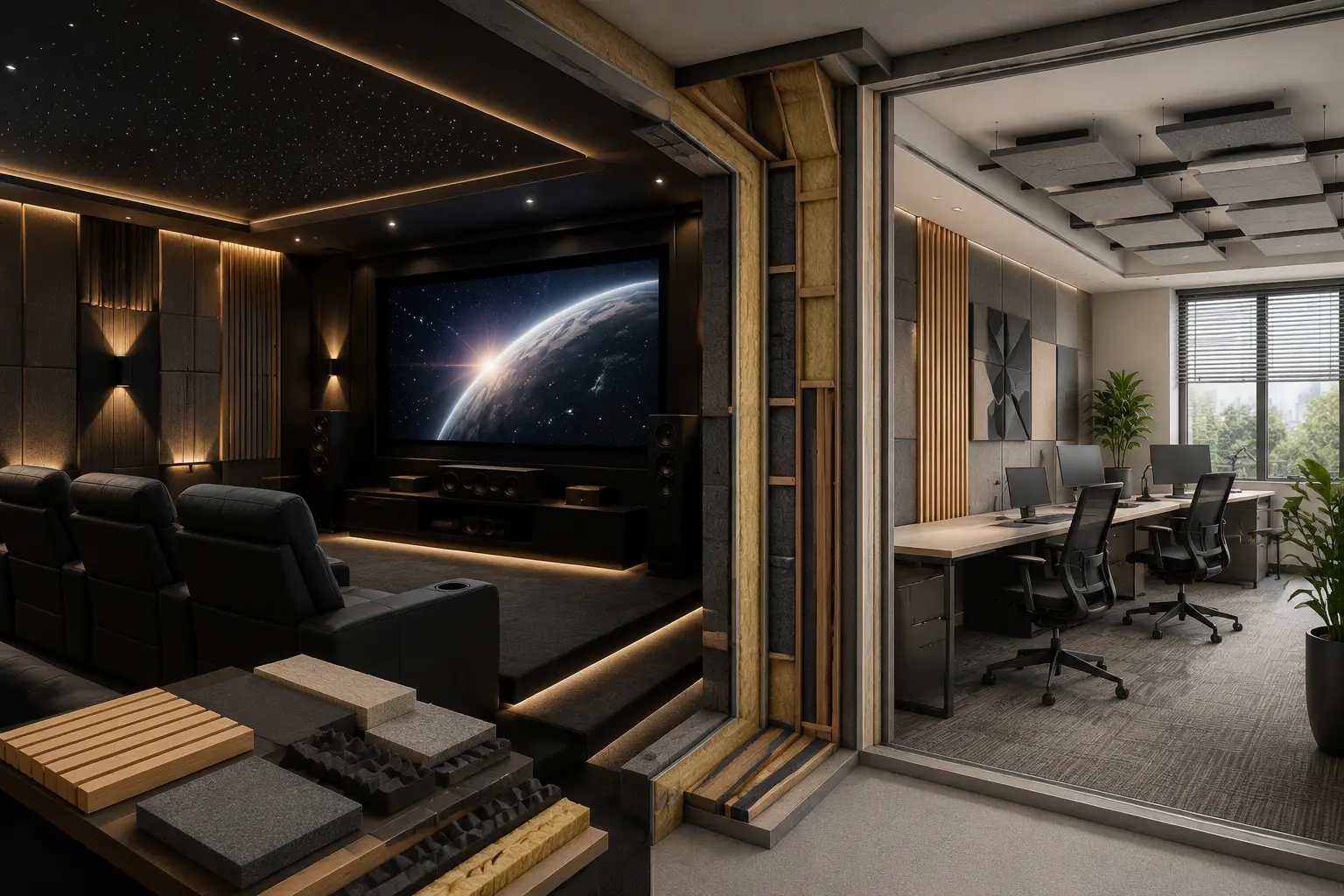
Soundproofing and Acoustic Solutions for Modern Home Theatres and Offices

Chirag Vekariya
Sound is one of the most ignored parts of interior design. People notice it only when there is echo, disturbance or outside noise. In home theatres, poor acoustics can spoil the movie experience. In offices, noise can reduce focus and privacy. Soundproofing and acoustic treatment help create spaces that feel comfortable and controlled.
Many people use the words soundproofing and acoustics together, but they are not exactly the same. Soundproofing controls sound transfer from one space to another. Acoustic treatment improves sound quality inside the room. A good design may need both depending on the purpose.
In Ahmedabad apartments and compact offices, noise issues are common because walls, ceilings and services are shared. Planning acoustics early gives better results than trying to fix everything after furniture is installed.
Understanding Sound Problems Before Choosing a Solution
Home theatres need controlled sound so that dialogues, music and effects are clear. Offices need quieter meeting rooms, call cabins and focused work areas. Apartments may need noise reduction from neighbours, traffic or internal activities. Each problem needs a different solution. Putting foam randomly on walls is not professional acoustic design.
Ahmedabad Homes Offices and Noise Control Needs
One local point many clients realise later is that Ahmedabad projects need planning for real life use, not only presentation. Dust from roads, strong summer heat, family gatherings, festival hosting, staff movement, society rules and parking limitations all influence the final experience. That is why soundproofing and acoustics should be discussed with practical questions from the first meeting. Who will use the space every day? How much cleaning will be needed? Which areas will face maximum use? What should stay flexible for future changes? When these answers are included in the plan, the design feels more comfortable and gives better long term value.
Soundproofing Versus Acoustic Treatment in Simple Words
Start by identifying the sound problem. Is sound entering from outside? Is sound leaving the room? Is there echo inside? Is speech not clear? Is the ceiling carrying noise? After this, select the correct treatment. This may include acoustic panels, insulation, sealed doors, soft furnishings, carpet, false ceiling treatment, wall layers or special partitions.
Acoustic Planning Checks for Rooms That Need Privacy
Sound issues should be understood properly before spending on panels or false ceiling work. Different rooms need different solutions.
Identify whether sound is entering or echoing inside
Seal gaps before adding visible acoustic panels
Plan door quality for private rooms
Place speakers and seating before theatre treatment
Use soft finishes where echo needs control
Check air conditioning noise in quiet rooms
These points may look basic, but on real sites they decide whether the space feels comfortable or confusing. In Ahmedabad, where homes and commercial spaces often have fixed columns, society rules, heat exposure and dust, such planning becomes even more important. A design that ignores local use may look nice initially but become difficult to manage later.
Doors Walls Ceilings Panels and Seating Details
For home theatres, room shape, speaker placement, seating position, wall treatment, ceiling design and door sealing matter. For offices, meeting rooms need speech privacy, while open offices need echo control. Materials should be fire safe, durable and visually matched with interiors. Acoustic solutions should not make the room look like a studio unless that is the design intention.
Mistakes That Make Acoustic Work Ineffective
Using decorative panels without acoustic purpose
Ignoring door and window gaps
Treating only one wall and expecting full soundproofing
Planning speakers after furniture is fixed
Not checking ceiling sound transfer
Confusing echo control with full sound blocking
Most project mistakes do not happen because the client has bad taste. They happen because the process starts without enough clarity. Once civil work, furniture production or finishing starts, every change affects cost and time. That is why professional planning, drawings and execution coordination should be treated as part of the investment, not as an extra expense.
Key Elements to Remember for Soundproofing and Acoustics
Understand the sound issue first
Separate soundproofing and acoustic treatment
Seal gaps around doors and windows
Plan speakers and seating together
Use acoustic materials correctly
Treat ceiling where needed
Balance function with interior look
Avoid random foam solutions
Consider neighbour comfort
Plan acoustics before final finishing
Why Choose Sarathi Innovations for Acoustic Design Guidance
Sarathi Innovations helps clients plan acoustic solutions as part of interior design. We look at room purpose, sound behaviour, material finish and visual style together. Whether it is a home theatre, office meeting room or focused work area in Ahmedabad, our design approach keeps comfort, performance and aesthetics balanced.
At Sarathi Innovations, the focus is always on a space that looks good, works well and stays practical after handover. We prefer to explain choices clearly, because clients should know why a material, layout or design detail is being suggested. This trust based process is especially useful for Ahmedabad homeowners and business owners who want quality without confusion.
A Quiet Closing Note on Comfort and Privacy
Good soundproofing and acoustics is not about copying a trend. It is about understanding the site, the people who will use it and the purpose behind every decision. When planning is done properly, the final space feels natural, comfortable and valuable. For any Ahmedabad project, the right designer should bring creativity, technical sense and local experience together.
FAQs About Soundproofing and Acoustic Solutions
1. Is soundproofing the same as acoustic treatment?
No, soundproofing controls sound transfer, while acoustic treatment improves sound quality inside the room.
2. Do home theatres need acoustic planning?
Yes, acoustic planning improves clarity, bass control and overall viewing experience.
3. Can office meeting rooms be made more private?
Yes, door sealing, partitions, ceiling treatment and acoustic materials can improve privacy.
4. Will acoustic panels spoil the room design?
No, modern acoustic panels can be designed to match the interior style.
5. Does Sarathi Innovations provide acoustic design guidance?
Yes, Sarathi Innovations can guide acoustic and soundproofing solutions as part of interior planning.