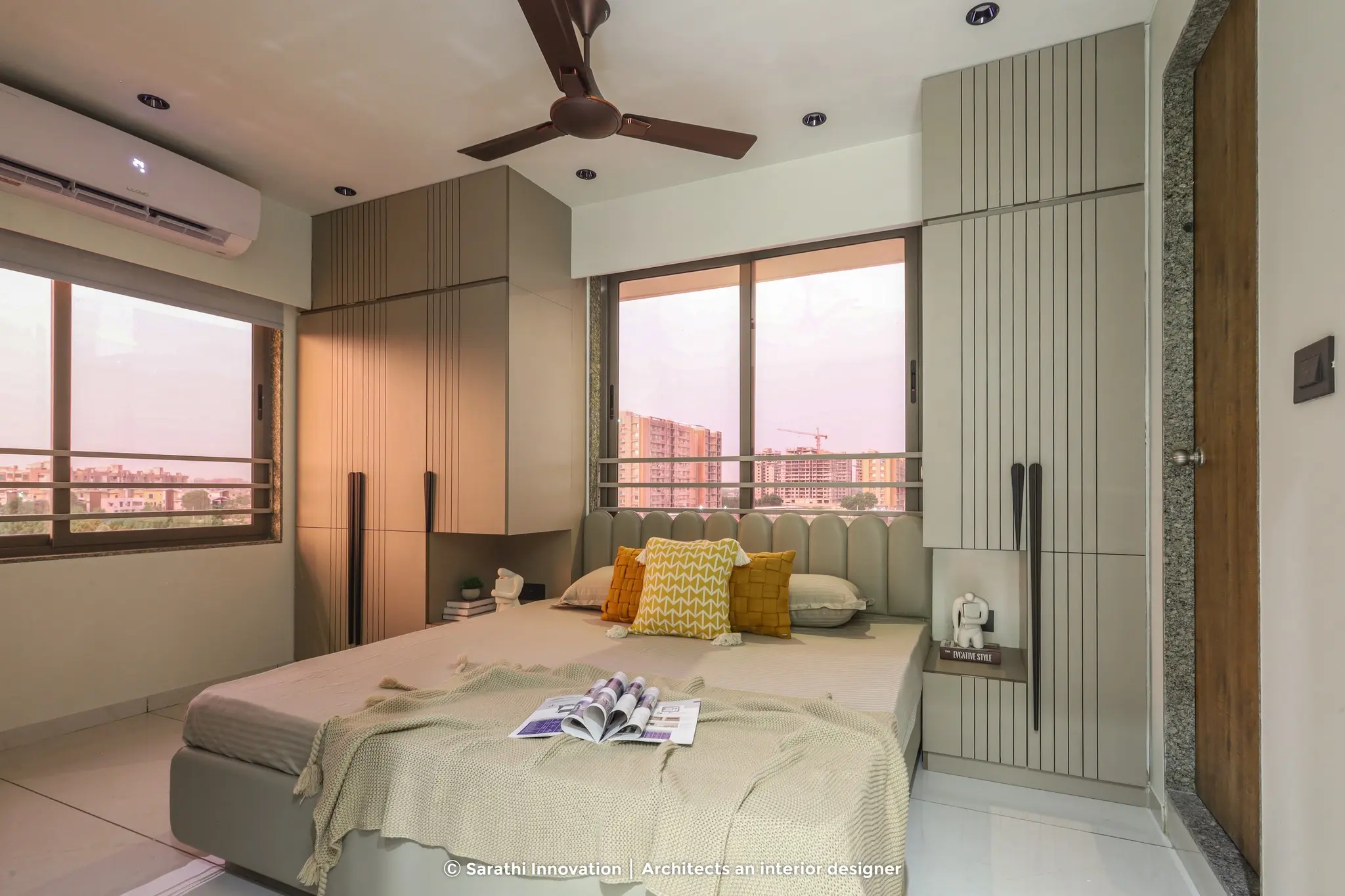
Modern Architects Embrace Smart Technology: The Invisible Revolution

Chirag Vekariya
The boundaries of architecture and technology are dissolving today in the built environment. Modern-day architects aren’t only designing walls, roofs and facades, they are coordinating smart ecosystems that respond to humans’ needs.
At Sarathi Innovations we refer to this as the Invisible Revolution: technology organically woven into the fabric of a home, invisible but immensely powerful. For architects and clients, this is a transition from what he calls passive design systems added after the fact when the buildings need to operate to active design, where intelligent infrastructure is woven in from day one.
Day One Integration: The Road to Avoiding Retrofit Solutions
Homeowners too often get caught up in the Retrofit Trap: retrofitting smart technology into a home long after it is finished. This results in spaghetti wires, bulky control boxes and hodgepodge solutions that detract from both the aesthetics and effectiveness.
At Sarathi Innovations, we understand this well and so our philosophy is that the Low-Voltage (LV) wiring, server hubs and sensor network are designed along with the structural drawing. The result is technology that is invisible, elegant and fully integrated turning every wall, ceiling and cabinet into a piece of a seamless smart ecosystem.
Due to the fact that LV pathways and server hubs need to be considered at the design stage, architects are able to ensure that every smart device, ranging from lighting panels to kitchen sensors work in synergy. The result is a home where technology feels effortless, intuitive and invisible.
Five Pillars of Intelligent Architecture
Intelligent architecture is built on a close-knit roof of climate regulation, lighting, kitchen learning, safety and media systems. Executed as they should be, these five pillars are a renaissance of comfort, efficiency and luxury.
1. Climate Control & HVAC: Adaptive Comfort
Modern climate control is more than a programmed thermostat. Sarathi Innovations: We use smart glass and automated louvers tailored for Ahmedabad’s harsh sun. In these systems, the settings are adjusted in real-time to reduce solar heat gain and lower air conditioning loads 20–30% without negatively affecting indoor comfort.
In addition, predictive HVAC systems understand the behavior of individuals so that power is consumed in an optimum manner while providing ideal temperatures. This forward-thinking ethos makes sure sustainability is a part of the design rather than an afterthought.
2. Human-Centric Lighting: Circadian Synchronization
Lighting is no longer just about light, it's about wellness. Human-centric lighting, also known as circadian lighting systems, mimic the natural cycles of sunlight to improve sleep quality, improve mood and enhance productivity.
Sarathi Innovations incorporates automated luminaires that change intensity and color temperature based on time of day, occupancy and even seasonal variations in light. This expertise allows effort to metamorphose indoor environments into temple-like spaces, alive with support for biology and not just aesthetics.
3. The Smart Kitchen Hub: Intelligent Culinary Spaces
The kitchen of today is an organic, intelligent system. Sensors embedded in modular cabinetry sense water leaks, monitor appliance use and even track inventory.
Through a central smart hub, homeowners can receive alerts about fridge contents, automate replenishment orders, and manage energy consumption for ovens, dishwashers, and other appliances. This proactive approach ensures efficiency, safety, and convenience without cluttering countertops with visible tech.
4. Security & Access: Biometric and Geo-Fencing Intelligence
Smart home security is about prediction, not reaction. Biometric entry systems combined with geo-fencing technology can sense a resident approaching, prepping the home in advance how bright the lighting is and what the temperature will be set to, even what radio station fielding autosuggestions of background music during dinner.
Sarathi Innovations focus on layered security: redundant fail-safes, secure cloud management, local backups and everything to guarantee the service will not be interrupted. Dwellers around the globe have peace of mind, knowing that their dwelling reacts intelligently without infringing on privacy or availability.
5. Acoustic & Media Integration: The Invisible Entertainment Network
Entertainment does not stop at living rooms anymore. Multi-room audio and video are smoothly integrated behind acoustic wall panels and within hidden conduits.
This approach renders cables and speakers invisible while allowing immersive soundscapes in every corner of the home. Homeowners enjoy cinematic audio without sacrificing interior design aesthetics and make tech feel invisible while being ubiquitous.
Sustainability Through Automation
When it comes to sustainability, the combination of architecture and technology can prove to be an effective weapon. Automated energy management and adaptive lighting, as well as climate-responsive building envelopes allow reduced carbon footprints while enhancing occupant comfort.
Designing with Building Information Modeling (BIM), Sarathi Innovations pre-emptively plots where structural and technological systems might interfere before our physical construction activity. As a result, BIM empowers architects to calculate energy loads, define optimal HVAC zoning and condense sensor networks. The outcome is a house that is technologically and environmentally advanced.
The Modern Home’s Central Nervous System
Every smart home needs its central nervous system: a coordinated network of servers, hubs and sensors. At Sarathi Innovations, these components are placed in specially made server rooms or dedicated cabinets in order to ensure reliability, security and scalability.
Redundant systems, for one, allow you to keep working even if the main network goes down, an important concern you may have as a homeowner: reliability. Whether Wi-Fi is down or a tablet requires service, the home keeps running, providing inhabitants with continued comfort and control.
Data Privacy and Reliability: Have You Embraced That Technology?
Data privacy is a massive concern for smart homes. At Sarathi Innovations, we use end-to-end encryption, local storage options and role-based access control to protect personal data.
Reliability is equally crucial. Monitoring systems are built with redundant pathways and failover mechanisms, so during network outages key operations such as security, climate control and lighting keep functioning. This combination of privacy and reliability fosters trust between homeowners and their technology.
Checklist for New Builders: Smart Home Readiness
Architects and Developers that want to integrate smart systems should make use of a Smart Home Readiness checklist:
- Blueprint-Stage Planning: Integrate LV wiring, server hubs, and sensor pathways at the design stage.
- Energy Modeling: Use BIM to simulate HVAC loads, solar gain, and lighting requirements.
- Future-Proof Wiring: Install conduits and hubs that can accommodate future devices.
- Security by Design: Plan biometric and geo-fencing systems alongside traditional locks.
- Acoustic Planning: Allocate spaces for hidden speakers and media hubs.
- Redundancy Planning: Ensure backup systems for critical functions like climate control and security.
- Human-Centric Design: Incorporate circadian lighting, ergonomic layouts, and wellness-driven automation.
- Sustainability Integration: Use smart glass, automated shading, and predictive HVAC to reduce energy consumption.
- Professional Oversight: Engage certified architects and engineers for systems integration.
- Regular Updates: Plan for software and firmware updates without disrupting daily life.
By adhering to this checklist, developers and homeowners can ensure that smart technology is embedded seamlessly, creating homes that are efficient, luxurious, and prepared for the future.
Sarathi Innovations: Turnkey Smart Living
Sarathi Innovations is developing Turnkey Smart Living, our vision coalesced around the proprietary Livoraa luxury philosophy and future-proof top of the class smart technology. Each home we design is a complete ecosystem where form and function meet without compromise.
From the invisible server “hubs” to circadian lighting, biometric security and smart kitchens, our homes anticipate residents’ needs, adapting in real time to enhance comfort levels, efficiency and safety. By designing for technology at the blueprint level, we avoid the retrofitting trap and create environments where the invisible revolution becomes apparent in your everyday life.
FAQs
What is the Invisible Revolution in smart architecture?
The Invisible Revolution refers to the seamless integration of smart technology into a home’s architecture from the very beginning, ensuring that technology becomes part of the structural blueprint. This eliminates the need for retrofitting, resulting in a more aesthetically pleasing, functional, and efficient smart home.
Why is planning for low-voltage (LV) wiring at the blueprint stage important?
Planning for LV wiring at the design stage ensures that smart technology, such as lighting panels, kitchen sensors, and HVAC systems, is fully integrated into the home from day one. This eliminates messy retrofits, allowing the technology to be invisible and elegant while ensuring smooth functionality.
How does climate control work in a smart home?
Smart climate control systems in modern homes are designed to optimize energy use while maintaining comfort. Systems like smart glass, automated louvers, and predictive HVAC learn occupant behavior and adjust in real-time to reduce energy consumption, ensuring adaptive comfort and sustainability.
What makes a smart kitchen different from a traditional one?
A smart kitchen incorporates sensors and automation to make everyday tasks more efficient. Features like water leak detection, appliance monitoring, and inventory tracking allow homeowners to receive alerts and manage energy consumption, all while keeping the kitchen aesthetically clean without visible tech clutter.
How does Sarathi Innovations ensure data privacy in smart homes?
Sarathi Innovations prioritizes data privacy by implementing end-to-end encryption, local storage options, and role-based access control. These measures protect personal information while ensuring that the home’s systems remain reliable and secure even in the case of network interruptions.