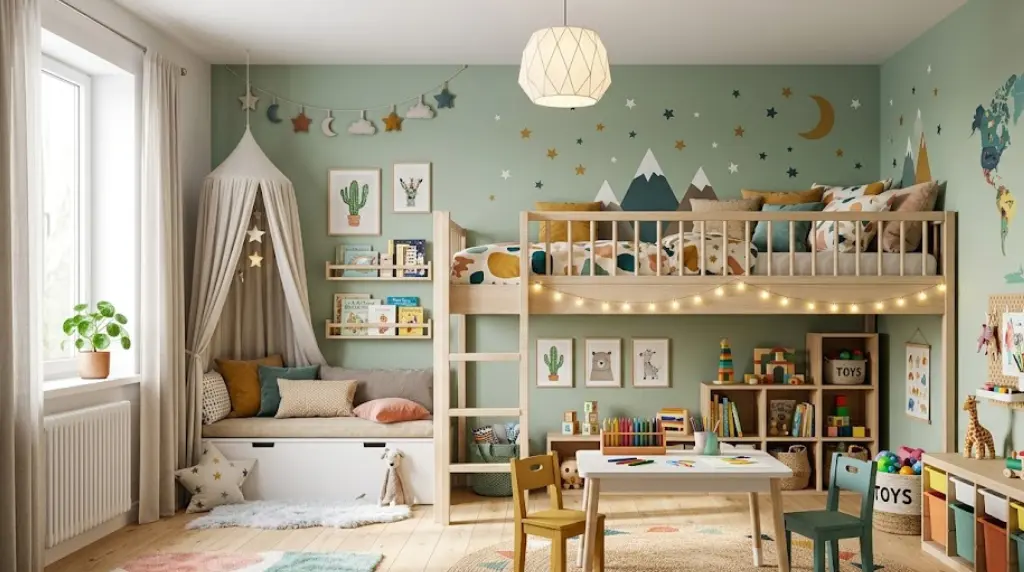
Creative Kids Bedroom Designs: Combine Play & Study Space

Chirag Vekariya
Key Takeaways
- Zoning is Essential: Separating play, study, and rest areas prevents distraction while keeping the room organized.
- Vertical Furniture Saves Floor Space: Bunk beds, wall-mounted desks, and loft systems maximize room efficiency in compact Indian apartments.
- Ergonomics Matter: Adjustable desks and chairs adapt to growing children, protecting posture and reducing visual clutter.
- Adaptable Aesthetics: Use neutral base tones with modular accessories so the bedroom can evolve as your child grows.
Designing a child's bedroom in modern urban Indian homes often feels like solving a complex puzzle. With apartment footprints shrinking across cities like Mumbai, Ahmedabad, Bengaluru, and Delhi NCR, parents struggle to balance dedicated study areas with fun play spaces.
Implementing creative kids bedroom designs allows you to seamlessly blend productivity and play without cluttering the room.
According to research published by the International Journal of Play, dynamic room environments that integrate unstructured play alongside dedicated quiet spaces significantly enhance cognitive development and emotional resilience in children. By thoughtfully zoning your child's space, you build an environment that supports academic concentration while nurturing imaginative play.
The Core Principle: Smart Zoning in Indian Kids' Rooms
Combining study and recreation in a single room requires strict functional demarcation. Without defined zones, homework time often turns into playtime.
1. The Study Zone: Focused & Ergonomic
The study desk should face away from active play triggers like toy storage or gaming consoles. Position the desk near natural lighting sources to decrease eye strain during evening revision hours.
- Ergonomic Furniture: Choose height-adjustable chairs and desks to accommodate growth spurts.
- Task Lighting: Install 4000K neutral white LED desk lamps to promote alertness during study sessions.
- Distraction-Free Storage: Keep textbooks and stationery in closed overhead cabinets to maintain a clean workspace.
2. The Play Zone: Imaginative & Safe
The recreation area should focus on mobility and easy cleanup. Using soft rugs or anti-skid floor mats defines the play area clearly.
- Open Floor Plan: Keep the central floor free for building blocks, floor puzzles, or board games.
- Low-Height Bins: Install accessible storage pull-outs so young children learn to clean up after playtime.
- Interactive Walls: Use chalkboard panels or magnetic paint on one wall for artistic expression.
Space-Saving Kids Bedroom Ideas for Modern Homes
Urban living demands furniture that performs dual roles. Leveraging smart storage and multi-functional setups ensures small rooms remain spacious.
High-Impact Space-Saving Strategies
- Loft & Bunk Bed Systems: Elevate the sleeping area to free up floor real estate underneath for a full study station or cozy reading nook.
- Foldable Study Desks: Wall-mounted drop-leaf desks fold flat when study time ends, opening up room for play.
- Under-Bed Storage Drawers: Utilize under-bed space for seasonal clothing, extra bedding, or larger toy chests.
- Vertical Pegboards: Mount wooden pegboards above desks for flexible hanging of craft supplies, headphones, and study schedules.
Play vs. Study Zone Planning
| Feature | Study Zone Requirements | Play Zone Requirements |
| Primary Focus | Concentration, posture, organization | Creativity, physical movement, safety |
| Ideal Lighting | Directed task lighting (300-500 lux) | Diffused ambient lighting |
| Furniture Type | Rigid, ergonomic, adjustable | Modular, soft-edged, easily moveable |
| Storage Solution | Closed cabinets, vertical shelving | Low open bins, pull-out drawers, baskets |
| Floor Covering | Smooth hardwood or tiles for rolling chairs | Soft anti-skid rugs or EVA foam mats |
Color Psychology & Decor in Modern Kids Bedroom Design
Color impacts mood, focus, and restful sleep. When executing a modern kids bedroom design India project, balance vibrant colors with calm neutrals.
Color Palette Recommendations
- Base Palette (60%): Off-white, soft beige, or light grey to keep the space open and airy.
- Study Zone Accent (20%): Muted blue, sage green, or soft teal to encourage focus and calm visual stress.
- Play Zone Accent (20%): Warm mustard yellow, muted coral, or pastel orange to spark creative energy.
Step-by-Step Implementation Guide
Follow this logical sequence to design a functional, long-lasting bedroom for your child.
1.Measure & Map Floor Layout:Establish clear physical boundaries first.
Measure room dimensions, window placements, and door swing paths. Map out separate sectors for resting, studying, and playing.
2.Select Multi-Functional Built-in Furniture:Maximize floor space with vertical builds.
Invest in modular furniture systems, such as study desks integrated with wardrobe side-units or elevated beds with study alcoves.
3.Install Targeted Lighting Schemes:Separate study task light from ambient play light.
Mount clear overhead task lighting over the study desk and install warm, dimmable ambient lights near the play and bed zones.
4.Organize Storage by Access Level:Encourage child independence.
Place daily school books and active toys on lower shelves accessible to your child. Store off-season items and high archives in upper overhead cabinets.
5.Personalize with Changeable Decor:Allow room for your child's preferences to evolve.
Use framed art clips, magnetic wall boards, and soft furnishings that can be easily updated as your child's hobbies change over time.
Frequently Asked Questions (FAQs)
What is the ideal room size for combining play and study areas?
A room size of at least 10ft x 12ft (120 sq. ft.) works best for a combined layout in Indian apartments. However, with custom vertical furniture and wall-mounted desks, rooms as compact as 80–90 sq. ft. can be optimized effectively.
How to keep a combined kids' bedroom organized and clutter-free?
Assign a dedicated bin or cabinet for every item category. Use labeled pull-out drawers at low levels for toys and keep study materials in closed upper shelving. Implementing a 5-minute cleanup routine before bedtime helps maintain order.
Why does ergonomic furniture matter for a child’s study area?
Children grow rapidly, and sitting at mismatched desks can lead to poor posture, back pain, and premature eye fatigue. Ergonomic chairs with footrests and adjustable desk heights support proper spinal alignment and improve study concentration.
How to separate study and play zones in a small shared bedroom?
Use visual dividers like open bookshelves, dual-tone wall paint, or contrasting rugs to mark functional areas without building permanent walls. Loft beds with desks underneath are also an ideal spatial divider for shared rooms.
What are the best low-maintenance materials for Indian kids' bedrooms?
High-pressure laminates (HPL) for desks and wardrobes resist scratches and stains. Anti-bacterial, washable wall paints allow easy removal of crayon marks, while stain-resistant synthetic rugs withstand heavy playtime wear.
Conclusion
Combining play and study into one cohesive room layout does not mean compromising on style or functionality. By focusing on smart zoning, flexible furniture selection, and organized storage systems, you create an empowering sanctuary where your child can excel academically and express themselves creatively.