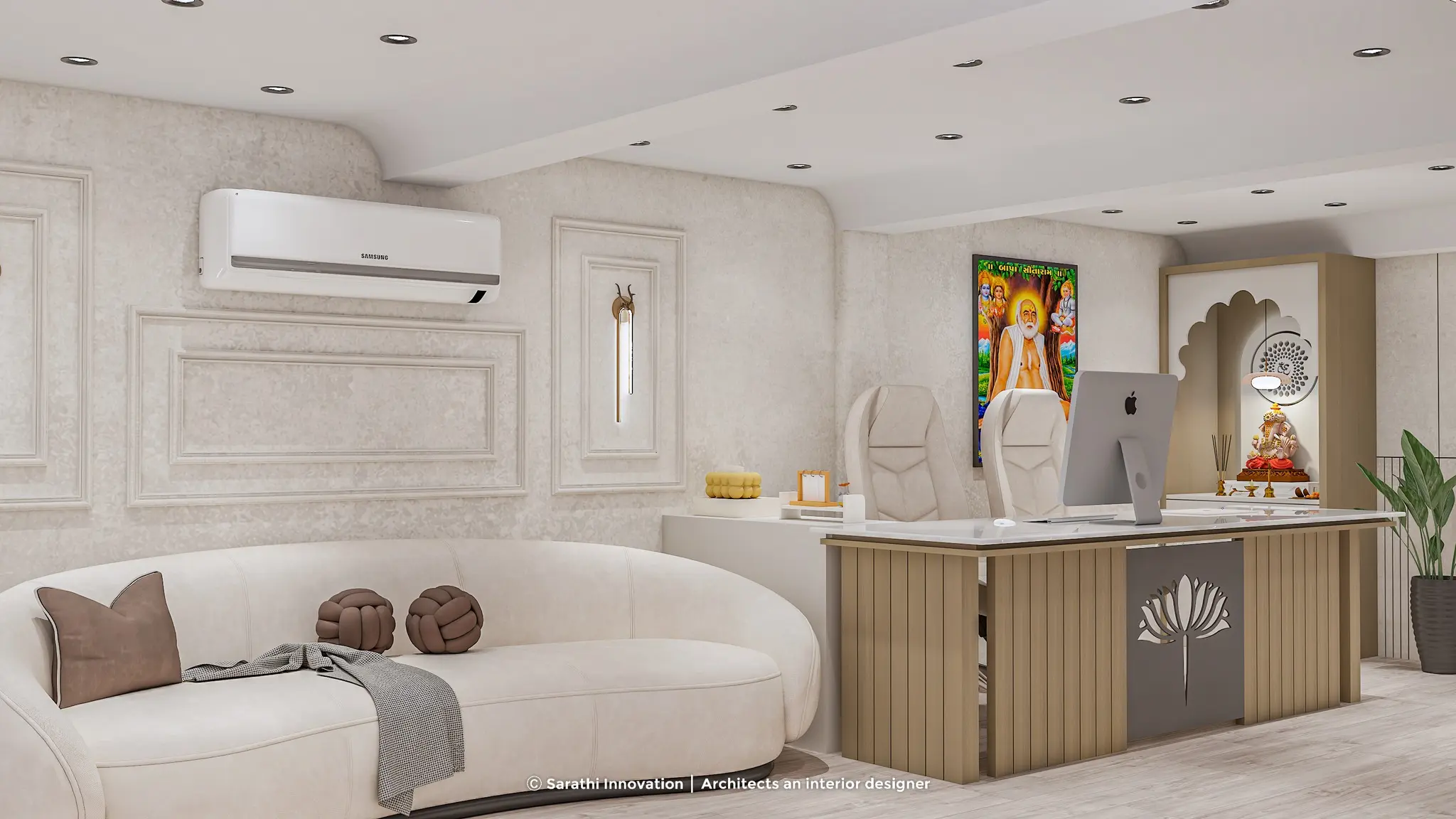
Best 11 Office Layouts For Your Modern Office Interior Design

Chirag Vekariya
For modern office space design, the layout becomes important for creating productivity, creativity and for collaboration. An organized office layout improves not just the aesthetic of the office but also aids in making an efficient work environment. The layout of an office has changed significantly with the emergence of flexible working, hybrid teams and advances in technology.
We Sarathi Innovation will be discussing the 11 popular office layouts that are suitable for modern office interior design. Whether you are designing an office for a startup from scratch or simply updating the layout of a large corporation, these alternatives will help you decide which design would work best for your space.
1. The Traditional Choice: Open Office Layout
What Is It?
The open office layout is the most classic and conventional kind of office design. It is made up of a big, open space only separated by small partitions so that employees are able to communicate and interact with each other easily.
Why Choose This Layout?
- Collaboration: With no walls separating workers, it’s easy and spontaneous to communicate and collaborate.
- Space-Saving: Saving the need of Cubicles, which can be costly and occupy more space.
Flexibility: Workspaces can easily be reconfigured with this layout.
Best For:
Any creative teams, brainstorming sessions, and co-op organizations.
Design Tips:
- Invest in furniture that encourages collaborative working such as shared desks and meeting spaces.
- Use acoustic panels or soundproofing to minimize external distractions.
- Include a variety of seating choices to accommodate various ways of working.
2. Cubicle Office Layout: Privacy with a Personal Touch
What Is It?
The cubicle office is designed with individual cubicles or partitions that give each employee a private workspace. This layout provides the best of both worlds: privacy, as well as open office dynamics.
Why Choose This Layout?
- Privacy: Employees may enjoy their own space for focused work and avoid disruptions.
. - Customization: Employees are able to customize their cubicles, thus making them feel more at home.
Focus: This works great for concentrated work such as deep work or client calls.
Best For:
Corporates, call centers or offices with people that need to stay focused uninterrupted.
Design Tips:
- Integrate natural light to alleviate feelings of disconnection.
- Decorate the cubicles in a way to make them feel less sterile (plants, personal decoration)
Make sure there are adequate spaces for collaboration and privacy.
3. Co-Working Space Layout: A Flexible and Dynamic Approach
What Is It?
The layout of the co-working space is ideal for businesses requiring flexibility; startups, freelancers or hybrid team to name a few. It has shared workspaces, such as where employees can rent a desk or a private office.
Why Choose This Layout?
- Flexibility: The employees can be anywhere in the office compared to when they worked on their desks, which promotes flexibility.
- Networking: Coworking spaces usually promote interaction between different teams and companies.
Common Facilities: These facilities usually contain common kitchens, lounges and meeting rooms.
Best For:
Small startups, remote working teams and creatives.
Design Tips:
- Add hot-desking areas for staff that don’t require a permanent desk.
- Purchase and provide ergonomic furniture that matches the different types of work styles.
Limit noise to certain zones for those who have to focus.
4. Hybrid Office Layout: The Future of Work
What Is It?
A hybrid office design combines in-office and remote work options. It includes workstations, collaboration areas and meeting rooms but even accommodates people who may be part-time remote workers with designated space.
Why Choose This Layout?
- Flexibility: This layout allows companies to adapt to changing work trends.
- Employee Satisfaction: By allowing employees to choose their working environment, companies can increase overall job satisfaction.
Cost-Efficiency: Reduces office space requirements, as not all employees are in the office at once.
Best For:
Companies with hybrid or remote working models, especially in post-pandemic times.
Design Tips:
- Incorporate flexible workspaces that can easily transition between meeting rooms and open areas.
- Use hot-desking for employees who don’t require fixed workstations.
- Ensure high-quality video conferencing equipment for remote collaboration.
5. Activity-Based Working (ABW) Layout: Dynamic Work Environments
What Is It?
An Activity Based Working (ABW) style layout provides different work environments intermixed within the same office space, varying from quiet zones to collaboration spaces or social areas. Employees are invited to select the region that best fits the category of work they’re performing.
Why Choose This Layout?
- Flexible: Employees choose the work environment that best fits their specific tasks, such as concentrated versus collaborative working.
- Collaboration: Friendly: It creates an even better environment for teamwork and interaction between departments.
Boost in Productivity: Studies have revealed that when people can choose their workspace, they are more productive.
Best For:
Creative agencies, tech firms and companies for whom flexibility is paramount.
Design Tips:
- Provide a variety of seating options: quiet desks, meeting areas, lounges, and phone booths.
- Design with mobility in mind, furniture should be easy to move and adjust.
- Focus on providing spaces that cater to different types of tasks, from brainstorming to solitary work.
6. Layout of Teams: Promoting Inter-Team Interaction
What Is It?
A team-based layout offices consists of departments or teams grouped together with their workstations in close proximity. This promotes working together and doing all the communication in teams.
Why Choose This Layout?
- Cooperation: Enables effortless cooperation between teams and departments.
- Improved Communication: Minimizes meetings since team members sit next to each other.
Departmentalisation: Individual departments can have their own space built for that function.
Best For:
Marketing teams, design teams, and any other team that needs to stay in the loop.
Design Tips:
- Give each team its own breakout room for use during group work.
- Make them ergonomic especially for prolonged work hours.
Set up informal break spaces for team building activities.
7. U-Shaped Layout: A Private, Efficient Design
What Is It?
U, where the open side faces the room. It is commonly used for offices in need of a combination of privacy and communication.
Why Choose This Layout?
- Privacy: The U-shape enables workers to focus, without distractions.
- Visibility: Managers and team leaders don’t have to feel overly in people’s faces; they can see the whole office without hovering or crowding a desk.
- Feature: It optimizes usage of space therefore they are suitable for smaller office spaces.
Best For:
Coaches Small-to-medium businesses, managers and teams that need focus but have the need for open communication.
Design Tips:
- Use natural light and plants to make the space feel more open.
- Include a central area for collaborative tasks or team meetings.
- Use high-quality office furniture for added comfort and support.
8. Closed Office Layout: For Maximum Privacy
What Is It?
Individual offices with solid walls and doors provide a maximum level of privacy. This is commonly used by executive offices or companies that deal with secretive work.
Why Choose This Layout?
- Privacy: Provides employees with a quiet, distraction-free zone to get work done.
- Private: Perfect for companies which work with sensitive details or need privacy.
- Control: Desk is fully controlled by managers and executives.
Best For:
Executives, law firms, or businesses where confidentiality is paramount.
Design Tips:
- Incorporate soundproofing to minimize distractions from neighboring offices.
- Design offices with personal touches to make them feel comfortable.
- Include communal areas for team interaction to balance the closed-off workspaces.
9. Bench Seating Layout: Simple, Efficient, and Clean
What Is It?
The benches seating plan consists of long desks or tables that are in most cases shared across a multiple employee space, lined up in rows, or clusters. This is compact and does not take up a lot of space.
Why Choose This Layout?
- Space-Efficient: Maximizes available office space, making it ideal for offices with a limited footprint.
- Collaboration: Employees are close to one another, encouraging interaction and teamwork.
Cost-Effective: Fewer pieces of furniture are needed, reducing overhead costs.
Best For:
Startups, tech companies, and businesses with many employees in a smaller office.
Design Tips:
- Add noise-canceling features to reduce distractions in open environments.
- Use clean, ergonomic designs for furniture to maintain comfort during long hours.
- Ensure adequate lighting and airflow to promote a healthy working environment.
10. Industrial Office Layout: A Raw, Modern Look
What Is It?
Of course, an industrial office layout involves raw materials such as exposed brick, steel beams and concrete floors. This layout is perfect for creative, edgy and modern businesses.
Why Choose This Layout?
- Aesthetic Appeal: Exudes a unique, stylish atmosphere that can reflect the creativity of your team.
Modern & Trendy: Perfect for tech companies or creative agencies looking to stand out.
- Open Feel: High ceilings and large windows create an airy, open space that feels less claustrophobic.
Best For:
Tech companies, creative agencies, and businesses aiming for a trendy, modern image.
Design Tips:
- Pair raw materials with sleek, modern furniture for a balanced look.
- Use open shelving to maintain the industrial aesthetic while adding storage.
- Incorporate plenty of lighting to brighten the space and emphasize the high ceilings.
11. Zen Office Layout: A Peaceful, Serene Space
What Is It?
The zen office layout invokes a peaceful, calming environment through minimalist furniture and natural elements like plants and water features with soothing color schemes.
Why Choose This Layout?
- Stress Reduction: The calming atmosphere helps reduce stress and increases productivity.
- Wellness: Encourages employees to focus on their mental health and overall well-being.
- Focus: Ideal for creative work that requires deep focus and inspiration.
Best For:
Companies in the wellness industry, creative agencies, or businesses that prioritize employee well-being.
Design Tips:
- Include lots of natural light, plants, and natural wood furniture.
- Incorporate calming colors like soft blues, greens, and earth tones.
- Create quiet spaces for meditation or relaxation to give employees a mental break.
Conclusion
Selecting the proper layout for your office plays a critical role in creating an efficient, comfortable working environment for your team. Whether it’s a zen-inspired design or an open office layout, the options are endless to fit every company. By knowing the best, and unique benefits of each layout can give you a good baseline for choosing what office layout increases productivity, creativity and crosstalk in your office.
Your modern office interior should take into consideration the flow of work, space requirements and employee needs when being designed. By implementing the right type of office design you are likely to improve their productivity and happiness, resulting in a great working environment for everybody involved.