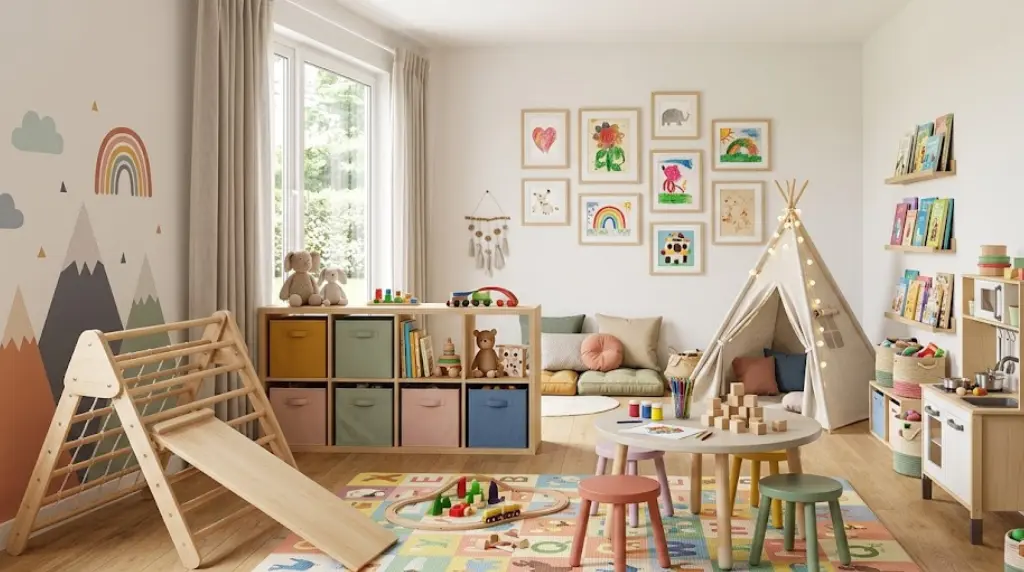
9 Kids Playroom Ideas That Are Fun, Flexible & Budget-Friendly

Chirag Vekariya
Key Takeaways
- Multi-Functional Furniture: Invest in modular pieces like storage ottomans or convertible desks that grow with your child.
- Vertical Space Utilization: Indian urban homes often lack high square footage; wall-mounted shelves and pegboards keep floors clear.
- Zoned Play Areas: Divide spaces into active, quiet, and creative zones to maintain order and encourage focus.
- Budget-Friendly Decor: DIY chalkboard walls, rug layering, and display ledges for books offer maximum visual impact at low cost.
- Safety & Maintenance: Prioritize non-toxic paints, rounded edges, and washable fabrics for effortless cleaning.
Designing a dedicated space for children to play, learn, and relax can feel daunting—especially when balancing urban space constraints with a modest budget. Homes in urban centers often require clever design choices that cater to small floor plans without compromising on fun or safety.
According to a survey on modern home interior preferences, over 65% of urban parents prioritize multi-purpose rooms that can evolve as their children grow. Designing an adaptable environment prevents the need for costly complete renovations every few years.
With thoughtful planning and modular design choices, you can create a high-utility room that nurtures creativity, stays organized, and respects your budget. Below are nine practical kids playroom ideas tailored for dynamic Indian households.
1. Create Defined Activity Zones
Children thrive when their environment provides structure. Dividing a room into specific activity zones-such as a reading nook, a building area, and an arts-and-crafts corner—encourages independent play and reduces clutter.
- Reading Nook: A floor cushion, a few throw pillows, and low display shelves.
- Creative Corner: A simple wooden table with wipe-clean surfaces for drawing and clay work.
- Active Zone: An open rug area for floor blocks, building sets, or light physical play.
Using distinct area rugs or color-blocked wall paint is an inexpensive way to demarcate these areas without installing physical partitions.
2. Implement a Low-Cost Kids Play Area with Modular Storage
Clutter control is the cornerstone of any functional playroom. Traditional fixed cabinets can be rigid and expensive. Instead, opt for open shelving units paired with lightweight, labeled fabric bins or rattan baskets.
- Accessibility: Keep toy bins on low levels so toddlers can clean up independently.
- Toy Rotation: Store half the toys in higher closets and swap them monthly to keep play fresh without buying new toys.
- Safety: Anchor all tall shelving units securely to the wall to prevent tip-over accidents.
For tailored storage solutions that fit tight corners or unusual room layouts.
3. Utilize Vertical Wall Space with Pegboards and Ledges
When floor space is limited, look to your walls. Wall-mounted storage and display options free up valuable walking space while turning toys and art supplies into colorful decor.
A sturdy wooden pegboard allows you to reposition shelves, hooks, and hanging pots as your child's needs change—making it an ideal feature for a flexible playroom setup.
4. Install a DIY Chalkboard or Magnetic Feature Wall
Instead of worrying about crayon marks on fresh paint, dedicate a wall section to creative expression.
Using non-toxic chalkboard paint or applying a peel-and-stick magnetic whiteboard sheet creates an interactive surface at a fraction of the cost of large easel stands.
- Clean and sand the lower section of an accent wall.
- Apply two coats of child-safe chalkboard paint.
- Frame the border with affordable wooden molding for a finished look.
5. Opt for Growing Furniture Pieces
Children grow quickly, and furniture scale should adapt accordingly. Investing in child-sized furniture that lacks longevity often leads to unnecessary spend within two to three years.
Look for multi-stage furniture options:
- Height-adjustable activity tables
- Convertibly stacked chairs
- Benches that double as hidden storage trunks
Choosing neutral wood tones or white bases allows you to update the room's theme using low-cost accessories like cushion covers, wall decals, and lamps. To see how modular furniture integrates into modern home designs, check out [LINK: creative home interior design ideas].
6. Design a Cozy, Low-Floor Reading Nook
Floor-based seating arrangements fit seamlessly into Indian living spaces and provide a safe, cozy environment for young children.
- Place a washable cotton rug or foam play mat on the floor.
- Stack oversized floor pillows or floor mattresses against a corner.
- Mount low display ledges where books face forward, allowing toddlers to choose titles by cover art rather than spine text.
Adding a soft string light overhead creates an inviting reading space without costly electrical alterations.
7. Incorporate Easy-to-Clean, Durable Materials
Playrooms endure significant wear and tear. Material selection directly impacts how long your play space stays looking fresh.
| Feature / Material | Recommended Option | Why It Works |
| Flooring | Interlocking EVA Foam / Washable Rugs | Cushions falls, easy to wipe or machine wash |
| Wall Paint | Low-VOC Washable Satin/Semi-Gloss Finish | Allows easy removal of scuffs and markers |
| Seating Covers | Canvas, Denim, or Removable Slipcovers | Withstands heavy washing and resists tears |
| Storage Bins | Cloth Cubes / Recycled Plastic Baskets | Lightweight, child-safe, and affordable |
8. Repurpose Everyday Household Items
Creating an engaging space does not require buying everything from specialty retail stores. Budget-friendly design relies heavily on upcycling and creative reuse.
- Cardboard Crates: Sand down smooth wooden crates, paint them in pastel shades, and stack them horizontally as book crates.
- Glass or Tin Jars: Wrap cleaned metal tins in jute twine or painted tape to hold colored pencils, brushes, and scissors.
- Fabric Offcuts: Turn leftover curtains or sarees into a cozy indoor teepee tent over a simple bamboo frame.
9. Integrate Playful Yet Cohesive Color Palettes
While vibrant colors stimulate young minds, overly saturated primary colors can make a small room feel chaotic and cramped.
To maintain a balanced aesthetic that complements the rest of your home, use a 60-30-10 color rule:
- 60% Neutral Base: Off-white, soft beige, or light grey on walls and major furniture.
- 30% Secondary Shade: Warm wood tones, soft sage green, or muted blue on rugs and curtains.
- 10% Accent Colors: Vibrant yellow, coral, or mint on art prints, cushions, and small storage bins.
Frequently Asked Questions (FAQs)
What is the ideal size for a kids' playroom?
A functional playroom does not require a large master bedroom. A space as small as 80 to 100 square feet—or even a dedicated corner in a living room—can serve as an effective play area if organized efficiently with vertical storage and zoned activities.
How to design a kids' playroom on a tight budget?
To design an affordable playroom, focus on flexible furniture, paint features like chalkboard walls, and open shelf storage using cloth bins. Repurpose existing household items, use wall ledges for books, and choose neutral furniture that ages well with your child.
Why does a flexible playroom setup matter for growing children?
Children’s physical developmental needs and interests change rapidly every few years. A flexible setup using modular furniture, adjustable shelves, and movable rugs allows you to reconfigure the room effortlessly without spending on new furniture at each stage.
How do I make a small playroom look larger and organized?
Use light neutral colors on walls, leverage vertical space with pegboards and floating shelves, and keep the center floor clear. Implementing a strict toy rotation system also reduces visual clutter dramatically.
What are the safest flooring options for a play area in India?
Interlocking EVA foam tiles, anti-skid washable cotton rugs, or high-density vinyl flooring are ideal. They offer impact absorption for young children while remaining easy to clean in Indian climate conditions.
Conclusion
Building a vibrant, functional, and budget-friendly playroom is all about smart planning rather than excessive spending. By focusing on multi-functional furniture, vertical storage, clear activity zones, and durable materials, you can create a room that adapts as your child grows.
Whether you are converting a spare room, upgrading an existing bedroom, or designing a cozy play corner in your apartment, Sarathi Innovations can help you realize your vision with expert space planning and custom interior solutions.
Ready to transform your home with practical, beautifully crafted space designs?
Contact Sarathi Innovations today to schedule an interior design consultation tailored to your family's lifestyle and budget!