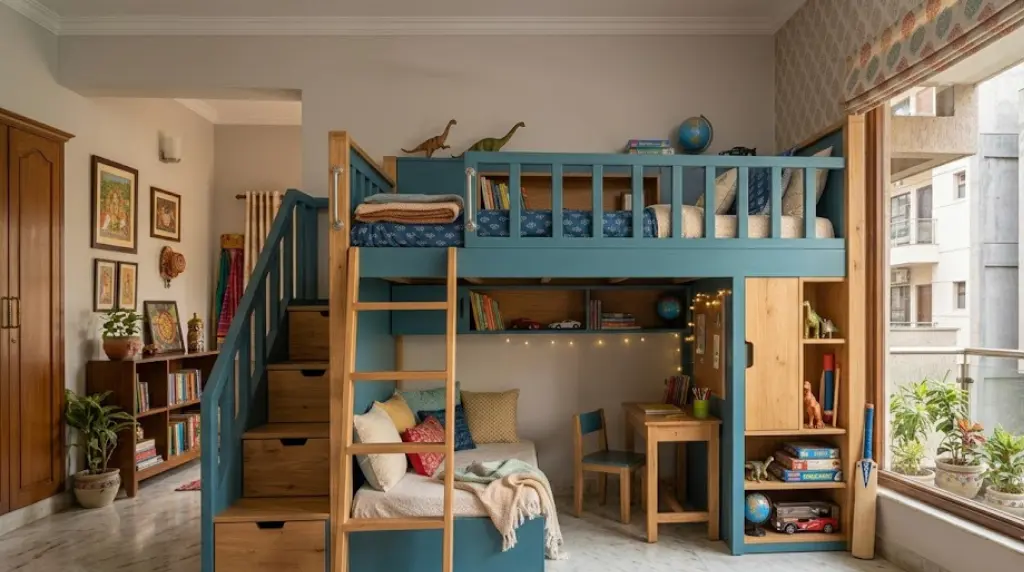
9 Bunk Bed Designs for Boys: Space-Saving Ideas

Chirag Vekariya
Key Takeaways
- Vertical Space Matters: Utilizing vertical room height frees up to 40% of floor space for study and play.
- Storage Integration: Staircase drawers and under-bed pull-outs eliminate the need for bulky extra wardrobes.
- Safety First: Always prioritize guardrails at least 5 inches above the mattress and solid hardwood or high-density ply construction.
- Custom Customisation: Indian apartments vary in floor-to-ceiling heights; custom-built bunk beds prevent cramped top bunks.
1. The Classic L-Shaped Bunk Bed with Study Desk
Instead of stacking beds directly on top of each other, the L-shaped layout places the bottom bed perpendicular to the top bunk. This creates an open nook underneath the top bed that perfectly accommodates a built-in study desk and ergonomic chair.
- Best For: Shared rooms for brothers with differing daily routines.
- Space Hack: Uses corner walls that otherwise remain underutilised.
2. Staircase Storage Bunk Bed
Ladder rungs can be tough on young feet. Swapping a standard ladder for a solid staircase unit turns every single step into a pull-out drawer.
- Storage Capacity: Adds up to 4 to 6 extra storage cubbies for shoes, toys, and sports gear.
- Safety Bonus: Provides broader, safer footings for younger boys climbing down at night.
3. Loft Bed with Integrated Wardrobe & Shelves
If you have an single boy in a compact bedroom, a loft bed elevates the mattress, leaving the entire ground floor free. You can fit a full-length wardrobe, bookshelf, and pull-out desk underneath.
4. Triple Bunk Bed for Three Siblings
For families with three children or frequent sleepovers, vertical triple bunk beds or L-shaped triple units use full room height efficiently.
Key Consideration: Requires a minimum ceiling height of 9.5 to 10 feet to ensure adequate headroom on the top bunk.
5. Adventure-Themed House or Treehouse Bunk Bed
Turn bedtime into play time with a wooden treehouse or castle superstructure. Slatted wooden roofs, window cutouts, and subtle neutral tones keep the aesthetic elevated without feeling overly juvenile as boys grow.
- Design Tip: Keep structural elements modular so themed panels can be removed when your child reaches their teenage years.
6. Bunk Bed with Pull-Out Trundle Bed
A standard twin-over-twin bunk bed equipped with a hidden trundle mattress beneath the bottom bunk turns a two-bed unit into a three-person sleeping space in seconds.
- Functionality: Slide the trundle out during sleepovers and tuck it away seamlessly in the morning to keep the floor clear.
7. Industrial Metal & Solid Wood Hybrid
For pre-teens and teenagers, playful wooden themes might feel too young. An industrial design using powder-coated steel frames paired with teak or oak finish wood offers a sleek, modern look.
- Durability: Resistant to rough wear-and-tear and easy to wipe clean.
8. Folding Murphy Bunk Bed
For ultra-compact urban apartments, wall-mounted folding bunk beds collapse flush against the wall during daytime hours.
- External Reference: According to architectural interior standards, convertible wall beds increase multi-purpose room utility by over 60% in micro-apartments.
9. Workstation Bunk Bed with Built-in Pegboards
Focus on productivity with a dedicated workstation underneath the top bunk. Incorporate perforated pegboards on the back wall for hanging school bags, headphones, and stationery organizers.
Bunk Bed Layouts vs. Traditional Bed Setup
| Feature | Standard Twin Beds | Classic Stacked Bunk Bed | L-Shaped Bunk + Desk |
| Floor Space Occupied | ~42 sq. ft. | ~21 sq. ft. | ~28 sq. ft. |
| Built-in Storage Potential | Low (Under-bed only) | Moderate (Drawers/Stairs) | High (Desk + Drawers + Shelves) |
| Ideal Ceiling Height | Any standard height | 8.5–9 ft minimum | 9 ft minimum |
| Safety Guardrail Need | Optional | Essential for top bunk | Essential for top bunk |
Essential Space-Saving Bedroom Ideas for Indian Homes
When implementing kids bunk beds in India, factoring in local room dimensions, humidity, and maintenance is critical.
- Prioritise High-Grade Engineered Wood or Marine Ply: Solid wood looks great, but high-grade boiling water resistant (BWR) plywood with laminates prevents warping in humid Indian climates.
- Utilise Vertical Wall Space: Install floating wall shelves above the top bunk for nightstand items like reading lights, water bottles, and books.
- Opt for Neutral Base Colours: Choose white, grey, or natural light wood tones for the main frame. Add colour through accent walls, bedding, and cushions that can easily be updated as preferences change.
Ensure Proper Guardrail Heights: In accordance with international child safety guidelines, top bunk guardrails must extend at least 5 inches above the top surface of the mattress.
Frequently Asked Questions (FAQs)
What is the safest age for a child to use a top bunk bed?
Children should be at least 6 years old before sleeping on the top bunk. Younger children lack the physical coordination required to safely navigate ladders and elevated edges at night.
How much ceiling height is needed for a bunk bed in India?
A standard bunk bed requires a minimum ceiling height of 8.5 to 9 feet. Ensure there is at least 30 to 36 inches of clear headroom between the top of the mattress and the ceiling so a child can sit up comfortably without bumping their head.
Can custom bunk beds be dismantled and reassembled if we move?
Yes. Custom modular bunk beds designed with high-quality knock-down hardware and heavy-duty joinery can be easily dismantled and reinstalled in a new home without losing structural integrity.
Are bunk beds safe for active boys?
Bunk beds are very safe when built to proper structural standards. Ensure the frame uses solid joinery, guardrails are securely bolted on all four sides of the top bunk, and weight capacities (typically 80–100 kg per bed) are strictly respected.
How do I choose between a ladder and a staircase for a bunk bed?
Choose a ladder if room space is tightly constrained, as it takes up minimal floor area. Choose a staircase unit if safety, ease of climbing, and additional storage drawers are your primary priorities.
Conclusion
Finding the right bunk bed design for boys boils down to balancing smart spatial planning, safety, and personal style. By taking advantage of vertical height, integrating built-in study zones, and utilizing stair drawers, you can transform a cramped room into an organised space your kids will love.