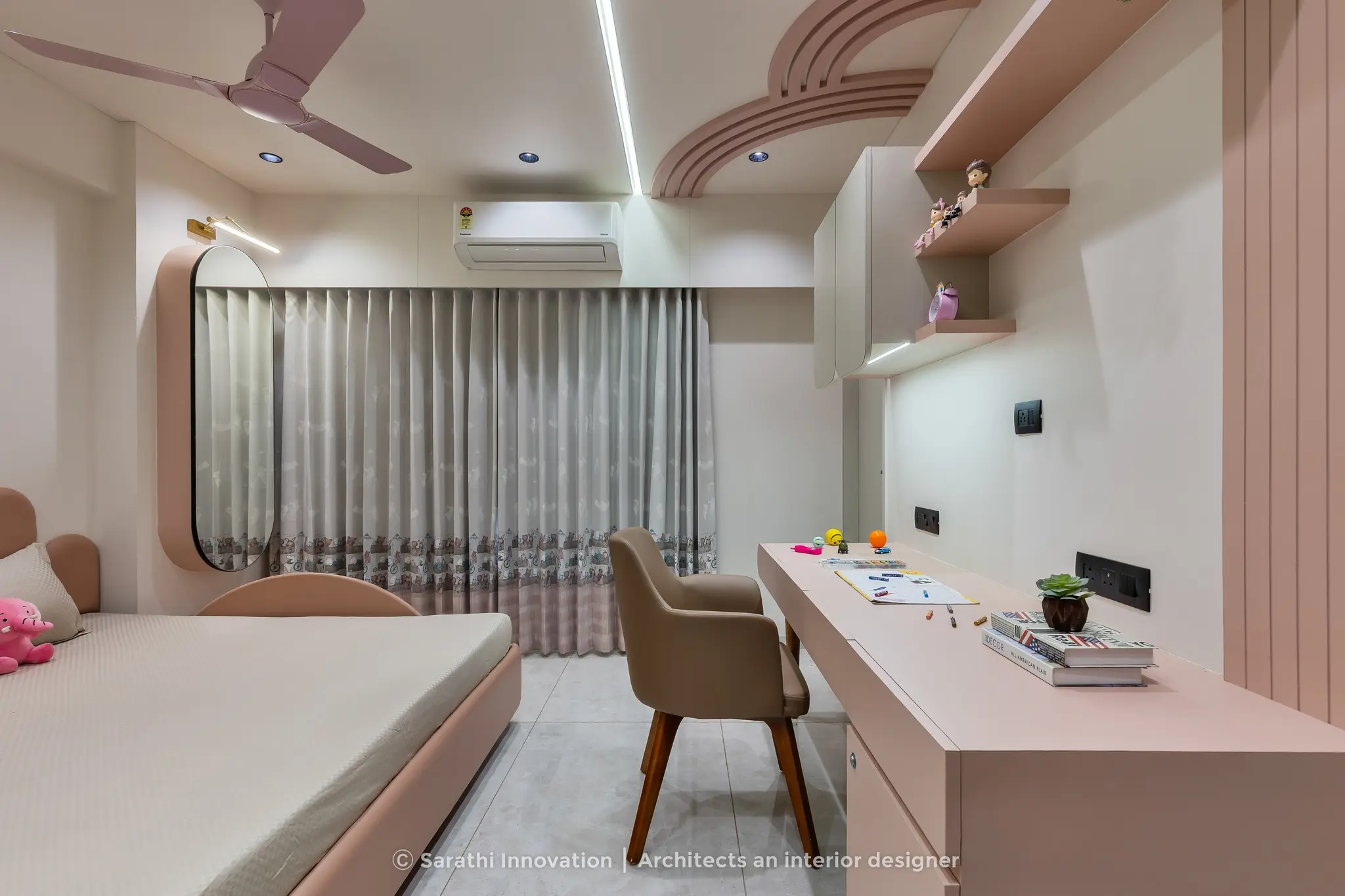
10 Study Room Ideas To Create The Perfect Space For Studying: Where Creativity Meets Focus

Chirag Vekariya
Your Environment Is Everything: The Importance of Where You Study
A messy desk, fluorescent lighting or a loud corner can quietly sap your energy. Psychologists refer to it as mental fatigue when your brain can’t focus because the environment is against you. At Sarathi Innovations, we have a research backed method to design spaces that enable deep work and it is not just about aesthetics. The goal? A study room that not only looks beautiful but also enables you to think clearly, focus deeply, and work effectively.
1. Ergonomics: The Science of Sitting
- Why it matters: The height of a desk, the support offered by a chair and our overall posture all have bigger effects on focus than the colors of walls or decor. Bad ergonomics can lead to back pain, eye strain and even decision fatigue.
- Pro Tip: Go for chairs with lumbar support that adjust and desks at elbow height. The monitor should be kept at eye level for long periods of study.
2. Smart Storage: Hide the Clutter
- Why it matters: Visual overload is distracting. Special built-ins or floating cabinets can conceal books, papers and gadgets, keeping your head clear.
Pro Tip: Use closed storage for distractions and open shelving only for things you use every day.
3. Multi-functional Genius: Space-Saving Solutions
- Why it matters: The size of many homes in Ahmedabad is limited. A sofa-cum-bed turns a guest room into a full-time study, without sacrificing cocooning comfort.
- Pro Tip: Find furniture that features hidden compartments great for storing stationery, files or even cushions.
4. Lighting Layers: Let There Be Light
- Why it matters: Natural light boosts mood and alertness, while task lighting limits eye strain. In Ahmedabad, explore heat-reducing blinds to manage harsh sunlight.
- Pro Tip: Use overhead lighting and desk lamps along with wall sconces for layered light.
5. The Tech-Ready Zone: Integrated Power & Connectivity
- Why it matters: Frayed cables and disheveled chargers disconnect you from your flow. A tech-friendly setup makes everything organized and handy.
- Pro Tip: Implementing cable management systems and power hubs behind your desk will keep everything neat and organized.
6. Biophilic Design: Green for Focus
- Why it matters: Plants lower stress levels, help purify the air and increase concentration. A little greenery in your study zone adds life to the space.
- Pro Tip: Snake plants or pothos are low-maintenance plants that do well indoors and as a general rule require little upkeep.
7. Zoning: Clearly Separate Work & Rest
- Why it matters: If you mix your study space with relaxation areas, you confuse your brain and make it harder to be productive. The boundary is obvious, and when it’s time to focus.
- Pro Tip: Delineating study spots particularly in multi-use rooms with rugs, shelves or drapes and curtains can also help.
8. Minimalism vs. Personality: Finding the Balance
- Why it matters: A minimalist space minimizes distractions, but personality maintains the room’s inviting feel. Blend neutral bases with personal accents such as artwork or framed photos.
- Pro Tip: Switch out decorations seasonally to save space in the home while keeping the scenery ever changing.
9. Acoustics: Silence Your Space
- Why it matters: Noise gets in the way of concentration. Soft furnishings, curtains or even acoustic panels will absorb sound in your study space.
- Pro Tip: If you share space, think about a white-noise machine or noise-cancelling headphones.
10. Budgeting for Growth: Invest Wisely
- Why it matters: Cutting corners on basics like a good desk or lighting setup can cost more in discomfort and lost productivity. One high quality item is more worth it than several cheap ones.
- Pro Tip: Invest on ergonomic furniture and effective lighting instead of decorative items.
Why Choose Sarathi Innovations?
We create quiet performance zones in busy Ahmedabad homes especially from Vaishno Devi Circle to South Bopal at Sarathi Innovations. We have a design philosophy that balances science-based ergonomics with aesthetics and functionality to create study spaces that not only look good, but also work for you.
So what are you waiting for? Start turning your study space into a productivity powerhouse now! This is just a glimpse of a snow-covered book reading corner in your study room. Call Sarathi Innovations for home study room consultation now.
FAQs
1. How much space do I need for a functional study room?
Even 6–8 sq. ft. of dedicated desk area can be enough if furniture and storage are optimized.
2. Can I combine a study room with a bedroom?
Yes! Multi-functional furniture like sofa-cum-beds or foldable desks helps maintain clear zoning.
3. What’s the ideal lighting setup for studying?
Use a mix of natural light, overhead lighting, and task lighting. Avoid harsh direct sunlight by installing heat-reducing blinds.
4. How do I choose ergonomic furniture on a budget?
Invest in an adjustable chair and a sturdy desk first. Accessories like monitor stands or footrests can be added later.
5. Are indoor plants really effective for focus?
Yes, plants like snake plants, pothos, or ferns reduce stress, clean the air, and improve concentration.