How To Choose A Chimney For Your Modular Kitchen: A Complete Guide

Chirag Vekariya
The kitchen, the heart of every Indian home; where cooking is an art. Modular kitchens are one of the favourite options for modern homes due to their stylish designs along with functionality. However, when it comes to selecting the suitable chimney for a modular kitchen, multiple elements need to be considered. A nice chimney not just enhances the look of your kitchen but also maintains the hygiene by removing smoke, grease and smell.
With Sarathi Innovations, we know the right choice makes all the difference. Therefore, let us have a closer look at how to select the ideal chimney for your modular kitchen.
Why a Chimney Matters in Modular Kitchen Design in Ahmedabad?
In Ahmedabad, a hot and dry city where rich spicy dishes are an everyday feature of cooking, a chimney is mandatory for a modular kitchen. Here’s why:
Handling Heat and Smoke
Living in Ahmedabad, the hot weather does not help either when it comes to cooking hot dishes like frying or oil based food. This chimney eliminates smoke and heat, maintaining a cool, smoke-free kitchen.
Preventing Grease Build-up
Indian cooking methods, especially frying, leads to grease and oil deposition. This helps in avoiding sticky oriented walls and surfaces, keeping your modular kitchen neat and clean.
Enhancing Aesthetic Appeal
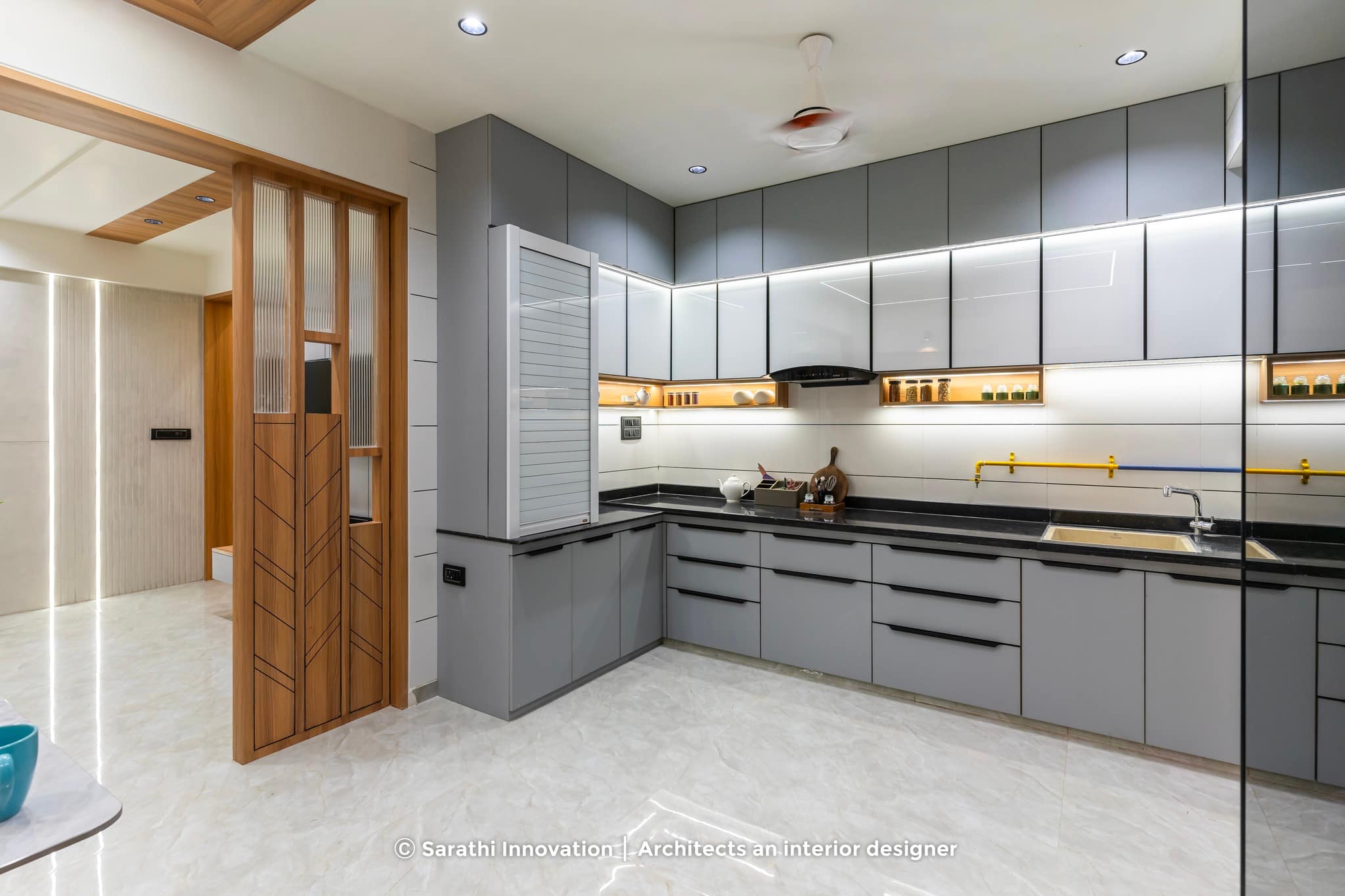
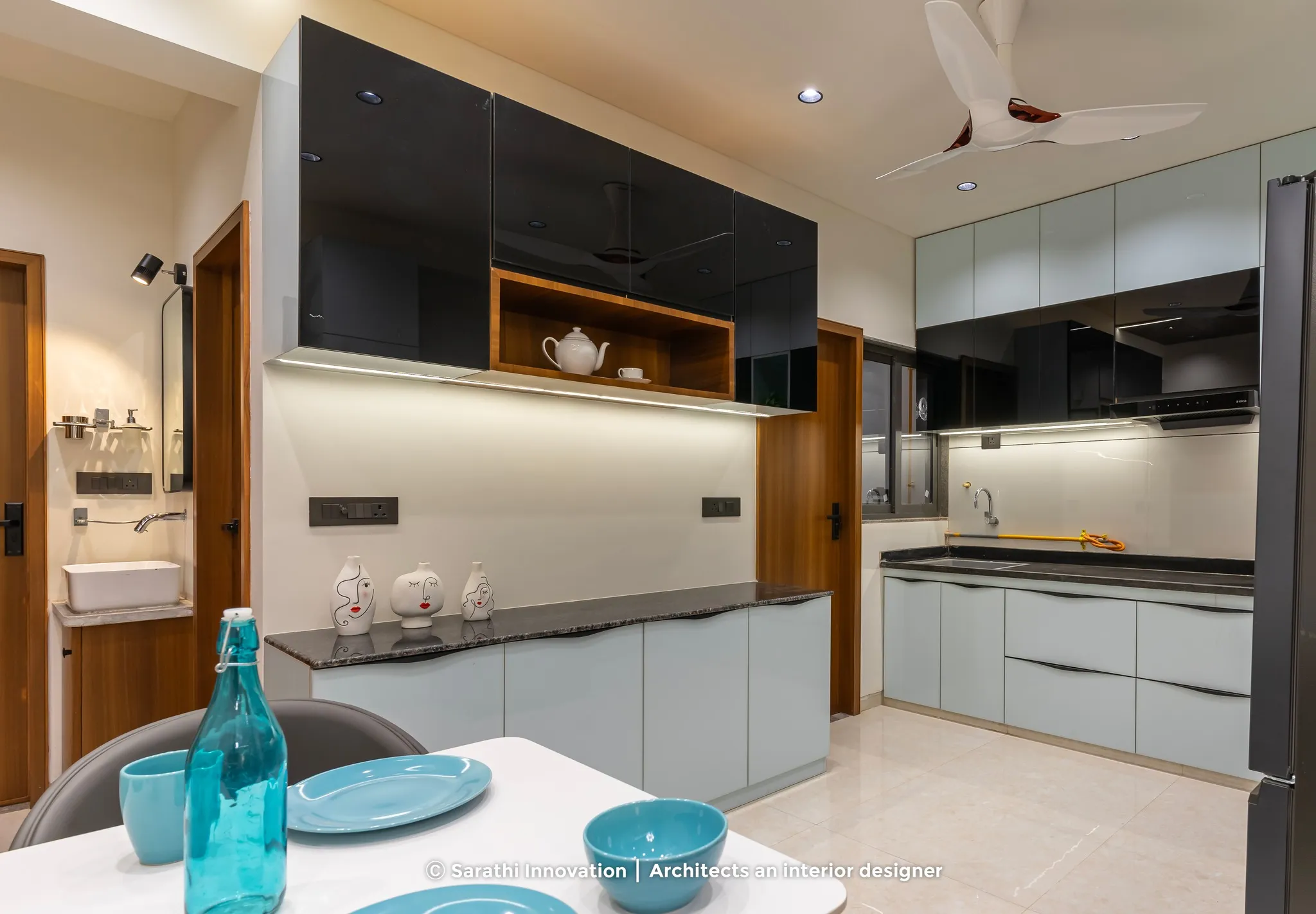
Modular kitchens are visually very appealing and functional. A chimney, which comes in modern designs, adds function and beauty to your kitchen as it blends well with the overall decor.
Improving Health and Safety
You need adequate ventilation to prevent inhaling harmful smoke and gases. It keeps the air in your kitchen clean and safe for you and your family.
Protecting Your Kitchen’s Longevity
Cooking with high heat can degrade kitchen surfaces over time. A chimney minimizes the amount of exposure to smoke and grease which helps retain your kitchen shine and durability.
Understanding Your Kitchen’s Requirements
What type of cooking you do is crucial to know before the purchase of a chimney. In Indian cooking, there is quite a considerable amount of frying and grilling along with spices that can lead to kitchen grease buildup. If you have a heavy cooking style, you'll need to look for a chimney with higher suction power to effectively handle smoke and grease.
Types of Chimneys
There are mainly two kinds of chimneys available in the market namely, wall-mounted and island chimneys.
- Wall-Mounted Chimneys: This is the most common type and used to be placed on your cooking area against the kitchen wall. They are simple to install and come in many shapes and designs.
- Island Chimneys: These are suitable for open kitchens or kitchens with an island setup. Ceiling-mounted are preferred for their sleek aesthetics and superior suctioning, they resemble those from the kitchen ceiling and are often preferred for their stylish look and efficient suction.
Suction Power
Suction power is the most important thing you need to consider when buying a chimney. It is expressed in cubic meters per hour (m³/h). For Indian kitchens, opt for a chimney that offers at least 1000 m³/h suction power. A kitchen with heavy spices or a large kitchen might require an exhaust that has a higher suction power.
Chimney Filters
Chimneys are available in different types of filters and you should choose based on your cooking style.
- Mesh Filters: These are the commonly used filters in chimneys. Cleaning them is a snap, but they may need frequent upkeep.
- Cassette Filters: These filters are made of aluminum/stainless steel and are great for heavy Indian cooking.
- Baffle Filters: Baffle filters is a self-clean, advanced kitchen filter that has become popular in recent times especially being used in more modular kitchens.
- Carbon Filters: For non-ducting chimneys. They soak up smoke and odors, which makes it perfect for small kitchens.
Noise Levels
Because of their efficiency, some chimneys can be a little noisy (particularly if they are great at sucking aber). This should be in the measured noise when you buy a chimney. The perfect noise level for a chimney is in the 50-60 decibels range. Though if you are noise sensitive, there’s models for quieter operations.
Size and Design
The chimney size should be in proportion to your cooking area. If you are using a cooking stove, your chimney is to be slightly larger than that. Design is an area where you have a lot of choices, from sleek and modern to traditional. Pick one that fits well with the rest of your kitchen’s decor.
Chimney with Auto-Clean Feature
Auto clean feature true to its name is a boon for people who do not have time or patience to manually clean their chimneys. Engineering a little heat to loosen grease and oil particles which are collected in a collection tray.
Price and Warranty
You want to maintain quality but you also don’t want to break the bank. Chimneys are available at different prices and you should choose a chimney that gives value for money. Chances are the manufacturer also offers an extended warranty. Most chimneys come with a warranty of 8-10 years.
Maintenance
To ensure your chimney remains in optimal condition, it is crucial this maintenance is carried out. But, regular cleaning of all types of filters and checking out the suction power from time to time will definitely save you from any future trouble if everything goes well with the motor itself.
Frequently Asked Questions (FAQs)
- What is the ideal suction power for an Indian kitchen?
An Indian kitchen needs a chimney with at least 1000 m³/h suction power. The higher the suction power, the better, if you often cook using oil and spices.
- How often should I clean my chimney?
They claim to clean the filters every 15-20 days based on usage. For chimneys with auto-clean features, cleaning can be done in a month.
- Are baffle filters better than mesh filters?
Yes, baffle filters are made for Indian kitchens because they can effectively trap grease and also require less cleaning than mesh.
- Can I install a chimney myself?
Though many models offer simple do-it-yourself installation kits, hiring a professional to properly install the system is advised, particularly if it requires ducting.
- How can I reduce noise from the chimney?
Opt for a model with low noise levels (50-60 decibels). Cleaning and maintenance on a regular basis can also keep noise down.
- Can a chimney be used without ducting?
Yes, there are ductless chimneys using carbon filters that absorb smoke and odors that work best for small kitchens.
- What’s the difference between a wall-mounted and an island chimney?
Wall mounted chimneys are installed on the kitchen wall and island chimneys are hung from the ceiling where open kitchens have islands in them.
- Is the auto-clean feature worth it?
The auto-clean feature is highly convenient, especially for those who do not have time for regular manual cleaning. It helps maintain the chimney’s performance with minimal effort.